
Is Schnitz Healthy Australia: Complete 7-Point Nutrition Guide
This question has no single answer, because the menu runs from a 345 kJ side salad to a 6,970 kJ box of tenders. Schnitz publishes kilojoules and full macros for its menu, so this guide reports those figures and lets the numbers speak. Nothing here is a verdict.
- 7 points
- Is Schnitz Healthy
- Checked 8 Nov 2026
This is an independent guide to the Schnitz menu. It is not affiliated with Schnitz, and it is not the official menu. Schnitz states that the menu may vary per restaurant.
Every figure in this guide comes from the official Schnitz menu, checked on 8 November 2026, and every percentage is simple arithmetic from those published figures. The official tables cover energy, protein, fat, saturated fat, carbohydrates, sugars and sodium for wraps, burgers, tenders, schnacks, kids meals, chips and dips.
This guide answers it with published figures only, and it links to the full menu so you can check every item yourself. No Health Star Rating is published by Schnitz, and no dietitian verdict exists, so this page reports what is published and nothing more.
The short answer
Is Schnitz healthy?
So is Schnitz healthy? The published figures say the answer depends on what you order, because the range on one menu is enormous. A garden salad side is 345 kJ, a plain schnitzel on its own is 1,400 kJ, and a 10 Pack of tenders is 6,970 kJ.
The format matters as much as the item, since a wrap saves about 170 kJ against the same build as a burger. Swapping chips for a side salad saves more, and the wraps and burgers page shows both figures for all eleven builds. The rest of this guide walks through the numbers.
At a glance
Schnitz nutrition at a glance
The table below gives the lightest and heaviest published figure in each category, so it becomes a question of what you order. Desserts run from 1,440 kJ for a flat cookie to 3,670 kJ for a skillet, while chips run from 1,910 kJ to 4,300 kJ.
| Item | Lowest kJ | Highest kJ |
|---|---|---|
| Handhelds | 2,620 kJ | 4,020 kJ |
| Tenders | 636 kJ | 6,970 kJ |
| Schnacks | 1,550 kJ | 5,000 kJ |
| Plates | 1,400 kJ | 4,400 kJ |
| Salads (with schnitzel) | 2,090 kJ | 3,140 kJ |
| Chips | 1,910 kJ | 4,300 kJ |
| Desserts | 1,440 kJ | 3,670 kJ |
Kilojoules
The full kilojoule ladder
Anyone comparing orders should start with this ladder, because kilojoules are the one figure Schnitz publishes for every item. The official reference is an average adult daily intake of 8,700 kJ, printed on every nutrition table. Each share below is that item divided by 8,700 kJ.
The ladder runs from 345 kJ for a garden salad side to 6,970 kJ for a 10 Pack of tenders, which is 80 percent of a whole day. A Basic Instinct wrap is 2,620 kJ, or 30 percent of a day, and the burger version is 2,790 kJ, or 32 percent.
Chips deserve a close look, because a family serve of original chips is 4,300 kJ, or 49 percent of a day on its own. Schnitzel and chips together come to 3,260 kJ, while the schnitzel alone is 1,400 kJ. The tenders page and the prices page carry the tables for those categories.
| Item | Energy | Share of an 8,700 kJ day |
|---|---|---|
| Garden Salad side | 345 kJ | 4% |
| Schnitzel on its own | 1,400 kJ | 16% |
| Basic Instinct wrap | 2,620 kJ | 30% |
| Basic Instinct burger | 2,790 kJ | 32% |
| Schnitzel and Chips | 3,260 kJ | 37% |
| OMG! burger | 4,020 kJ | 46% |
| 10 Pack Tenders | 6,970 kJ | 80% |
| Family Original Chips | 4,300 kJ | 49% |
Macros
Protein, fat, carbs and sodium
Asking is schnitz healthy usually means asking what is actually in the food, so this section looks past kilojoules to the macros. Schnitz publishes protein, fat, carbs, sugars and sodium for wraps, burgers, tenders and schnacks on its official menu. The table below lists seven items for a side by side comparison.
The wrap is not lower on every measure. A Basic Instinct burger carries 45.0g of protein and 26.1g of fat, while the wrap carries 42.6g of protein and 29.2g of fat. The wrap cuts carbs from 60.7g to 46.6g, yet the fat figure rises, so the swap trades one number for another.
An OMG! burger lists 66.0g of protein, 44.2g of fat and 1,790mg of sodium, the biggest figures here. A 3 Pack of tenders lists 35.7g of protein with 1,180mg of sodium, while small original chips add 1,130mg of sodium. The Kiddy Schnugget Pack lists 24.7g of sugars, the highest sugar figure here.
| Item | Protein | Fat | Carbs | Sugars | Sodium |
|---|---|---|---|---|---|
| Basic Instinct burger | 45.0g | 26.1g | 60.7g | 5.7g | 968mg |
| Basic Instinct wrap | 42.6g | 29.2g | 46.6g | 4.0g | 904mg |
| OMG! burger | 66.0g | 44.2g | 72.4g | 15.6g | 1,790mg |
| 3 Pack Tenders | 35.7g | 32.5g | 41.0g | 8.1g | 1,180mg |
| Single tender | 11.8g | 6.5g | 11.2g | under 1g | 350mg |
| Small Original Chips | 6.8g | 20.4g | 61.3g | 1.8g | 1,130mg |
| Kiddy Schnugget Pack | 17.6g | 27.1g | 73.1g | 24.7g | 1,560mg |
Wrap vs burger
Wrap or burger, what changes
The wrap saves about 170 kJ on every build. A Basic Instinct drops from 2,790 kJ as a burger to 2,620 kJ as a wrap, and the gap runs through Plain and Simple, The Swiss and the OMG!. The saving comes from the bun, since the schnitzel and fillings stay the same.
The minis run the other way, and the reversal is verified. A Mini Basic Instinct lists 1,560 kJ as a burger and 1,630 kJ as a wrap, and the Mini American Dream flips too. See the schnacks guide for the mini list, where the wrap sits above the burger on every mini.
Chips and dips
Chips, dips and the sugar surprise
Check the chips first. Small sweet potato chips list 1,930 kJ against 1,910 kJ for small original chips, so the energy is nearly the same. The gap is sugars: 21.7g in the sweet potato serve against 1.8g in the original, per the chips and dips guide.
Dips add up faster than most people expect. Tomato sauce lists 146 kJ per serve and BBQ relish 193 kJ, while aioli lists 750 kJ and honey mustard mayo 573 kJ. The dunking-cup sauces carry no published per-serve figure, so their kilojoules stay PENDING here rather than guessed.
Salads
Salads and the swap
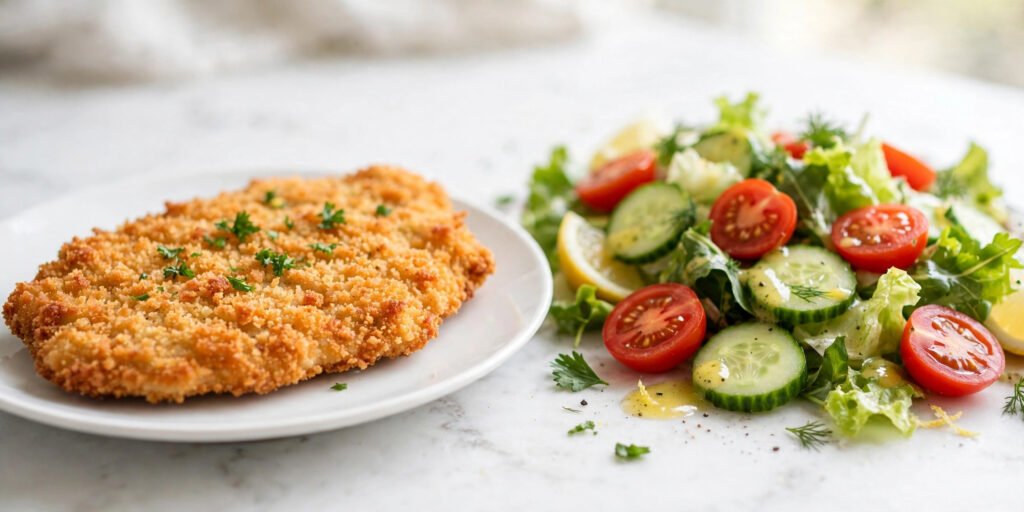
The official menu frames its salads as the lighter corner, for readers asking is schnitz healthy about a full plate. Its own words call the salads a mix of fresh ingredients with chicken or plant-based schnitzel, a balanced and flavourful option. The plates and salads guide lists every salad with published kilojoules.
The swap is where the numbers move most. A schnitzel lists 1,400 kJ, and adding a garden salad side at 345 kJ brings the plate to 1,745 kJ by simple arithmetic. Schnitzel and chips lists 3,260 kJ, so the salad swap saves 1,515 kJ, the biggest single saving on the menu.
Desserts and kids
Desserts, kids and drinks
Flat cookies list 1,440 kJ and 1,520 kJ, while brownies list 2,260 kJ to 2,270 kJ and loaded cookies run 3,160 kJ to 3,500 kJ. The skillets sit at the top at 3,600 kJ to 3,670 kJ, above a schnitzel and chips plate. See the desserts guide for the full dessert list.
The Kiddy Schnugget Pack lists 2,540 kJ, the Teeny-Weeny slider 2,960 kJ and the wrap 3,100 kJ. Families will find the full kids figures in the kids menu guide. No drink kilojoule figure is published on the official menu, so drinks stay PENDING here.
Method
What the numbers do not say
No Health Star Rating is published for any Schnitz item, and no dietitian verdict exists. Every figure here comes from the menu tables, per serving, with the note that handmade sizing may vary. Drinks carry no published kilojoule figure, and Go naked has none either, so neither appears as a lower-kilojoule option.
Kilojoules alone do not describe a meal, since protein, fat, sugars and sodium move on their own tracks. A high-protein build can carry high sodium, and a low-kilojoule side can carry high sugars, as the tables show. For allergen and gluten free detail, see the gluten free guide.
Keep looking
Explore the rest of the menu
The other 8 categories on the menu, with the same official figures and the same labeled delivery prices.
Conclusion
Schnitz nutrition, the short version
Anyone asking is schnitz healthy has the figures, from 146 kJ for tomato sauce to 6,970 kJ for a 10 Pack of tenders. Handhelds run 2,620 to 4,020 kJ, wraps save about 170 kJ on full-size builds, and the salad swap saves 1,515 kJ. See our prices page for the short version.
The figures point in different directions at once. A wrap saves kilojoules yet adds fat, sweet potato chips match original chips on energy yet carry more sugars, and the biggest saving comes from a side swap. Use the numbers to compare orders, and check the store for anything the menu leaves unpublished.
FAQs
Is Schnitz healthy questions
Is Schnitz healthy?
No single answer fits the whole menu. Published figures run from 146 kJ for tomato sauce to 6,970 kJ for a 10 Pack, so the numbers depend on the order.
How many calories are in a Basic Instinct?
A Basic Instinct burger lists 666 calories and the wrap lists 625 calories, from the official menu tables. The burger lists 2,790 kJ and the wrap 2,620 kJ.
Is a Schnitz wrap lower in kilojoules than a burger?
On full-size builds, yes, by about 170 kJ. On minis the wrap is higher, with a Mini Basic Instinct wrap at 1,630 kJ against 1,560 kJ for the burger.
Are sweet potato chips lower in kilojoules than original chips?
No. Small sweet potato chips list 1,930 kJ against 1,910 kJ for small original chips. The sweet potato serve also carries 21.7g of sugars against 1.8g.
What is the lowest kilojoule meal at Schnitz?
A plain schnitzel on its own lists 1,400 kJ, the lowest figure for a main. A single tender lists 636 kJ, and the Nosh Box lists 1,590 kJ.
Does Schnitz publish nutrition information for every item?
Nearly. Full tables cover wraps, burgers, tenders, schnacks, kids, chips and dips, while plates, salads and desserts list kilojoules only. Drinks list no figure.
Leave a comment
Spotted a change at your local store, or a figure that no longer matches the official page? Say so here. Comments are moderated.
No comments yet.
Be the first to share what you found at your store.